
Cherokee Released Booking Photos
A booking photograph is an image created or held as part of a booking record. Cherokee County voluntarily places photos on recent Released cards. Release from jail does not erase the booking episode or convert the photo into proof of a conviction. Charges are allegations until resolved by a court, and a person may leave custody for bond, court order, time served, transfer, or another reason.
Kansas public-record policy favors access to nonexempt records, but access is not absolute. K.S.A. 45-221 contains exemptions, including rules affecting criminal-investigation records. Juvenile, sealed, expunged, protected-victim, medical, investigative, and security-sensitive material may be withheld or limited. Research found no Kansas law that guarantees every mugshot will remain online and no substantiated statewide anti-pay-to-remove statute.
Locate Cherokee County Released Mugshots
Start with the agency that created the relevant image. The county sheriff creates the local booking record. KDOC holds state correctional images. Other tools have narrower roles and should not be treated as interchangeable photo archives.
| Channel | Photo status | Best use |
|---|---|---|
| Sheriff Released roster | Yes, thumbnail and larger profile image | Recent Cherokee County Jail bookings |
| Sheriff Current roster | Yes | Custody contrast only, not released people |
| Sheriff app | Not verified by store copy | Alternate inmate-information access after device checking |
| County KORA request | May be available after custodian review | Older local booking photo by booking number |
| KASPER | Digital image may display | KDOC population, not necessarily the county booking photo |
| KBI registry | Only qualifying registrants | Registry purpose, not a general release search |
| VINELink | Fields vary | County custody notifications, not a promised photo archive |
| News or third parties | Possible but nonofficial | Discovery that must be checked against official records |
BOP's locator is not a federal mugshot gallery, and USMS offers no comparable historical photo search. Use the record route belonging to the custodian.
Cherokee Sheriff Mugshot Roster
The official Released roster is the best recent local photo source. Each card shows a thumbnail, name, booking number, age, release time, booking time, charges, bond, and a profile link. The profile adds a larger booking image, full name, gender, race, arresting agency, and charge detail.
The official roster screenshot shows how the sheriff pairs photos with release timestamps.
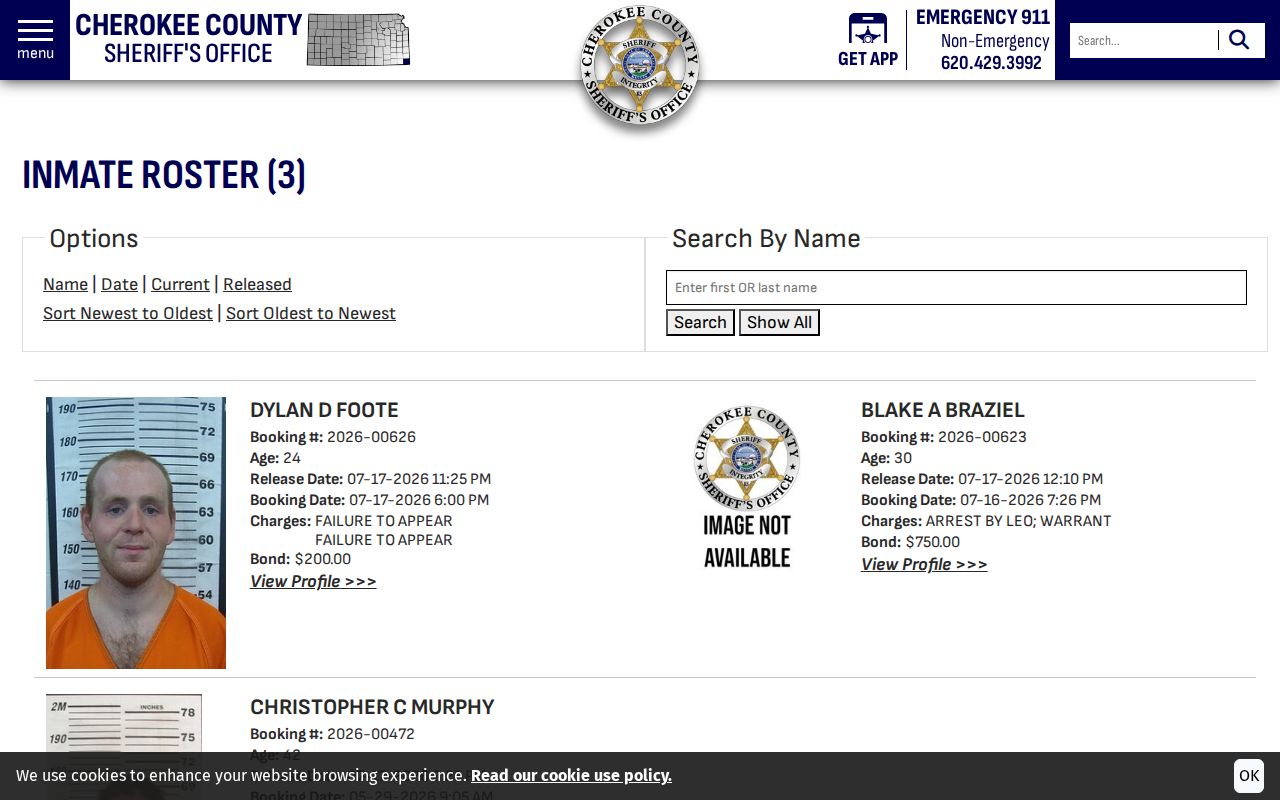
The image documents the live layout, while the booking number and dates provide stronger identity checks than the photo alone.
The feed has no promised retention period. An older photo may roll off even though the underlying record still exists. Check the Cherokee County 24-Hour Release List for a same-day timestamp method.
Cherokee Sheriff App Photo Limits
The official sheriff app page, Google Play listing, and Apple listing confirm an inmate public-information feature. They do not prove the app has a Released filter, displays mugshots, or updates at the same time as the web roster. Device verification is required before relying on those features.
The official app image confirms the alternate channel without establishing unlisted functions.
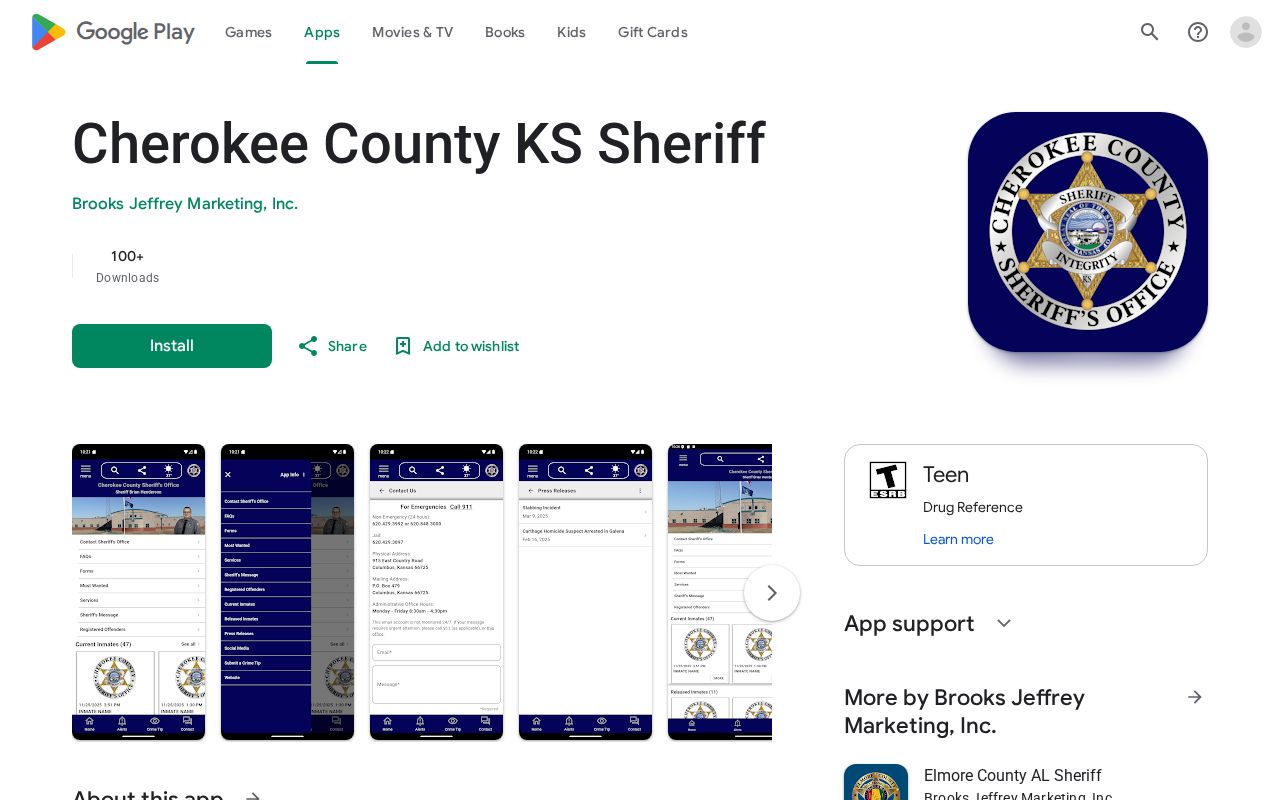
Use the web Released roster as the confirmed photo source until the live app view verifies more.
Request Cherokee County Booking Photos
For an older image, ask for the specific existing record under the Kansas Open Records Act, K.S.A. 45-215 et seq. Cherokee County routes KORA inquiries through the County Clerk. A narrow request is easier to identify and less likely to require broad staff work.
- Find the full name, booking number, and approximate booking and release dates.
- Use the Cherokee County KORA form.
- Ask for “the booking photograph associated with booking number [number] in its existing electronic format.”
- Request segregable nonexempt portions if another part of the file is withheld.
- Ask for a cost estimate before work begins and keep any written response.
The county may charge cost-recovery fees in advance. No reliable numeric photo or copy fee was verified, so obtain an estimate. An agency need not create a custom image or new report. A denial should give the legal reason under the county form and KORA process.
KASPER Cherokee Offender Images
KASPER is the Kansas Department of Corrections search. It can display a digital image for a state offender. That photo is a KDOC image and may differ from the Cherokee County booking photo. KDOC also warns that the recorded image date may not be the date the photograph was actually taken.
Search by KDOC number when known. Name search can be narrowed by date of birth, conviction county, supervision county, location, facility, or supervision type. Read the complete custody and supervision history. KASPER is not a county-jail archive or complete Kansas criminal history.
The KASPER screenshot illustrates the state search and released or discharged detail route.
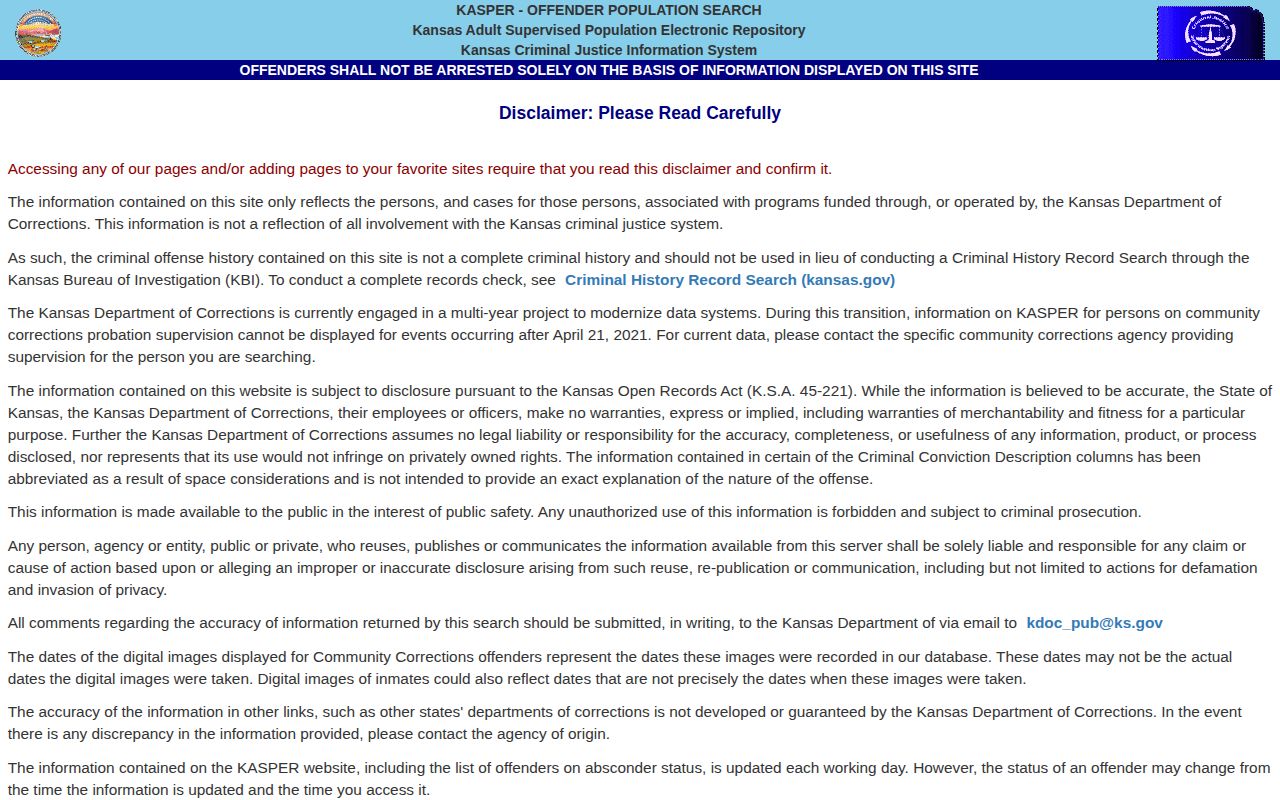
Use the KDOC number and history to match the state record rather than relying on facial similarity.
Check Nonofficial Cherokee Mugshots
Local news or third-party pages may preserve a booking image after the sheriff card is no longer visible. Those copies can be stale, mislabeled, incomplete, or detached from a later court result. Do not substitute an aggregator's caption for the booking number, county record, or court docket.
Commercial pay-to-remove framing is not a sound records route. Research did not substantiate a Kansas statewide anti-pay-to-remove law, so no legal promise should be made. For identity or current access, return to the sheriff, county custodian, KDOC, or court that created the relevant record.
Expunge Cherokee County Mugshot Records
Expungement is a legal process that can restrict or change later public access to an arrest or conviction record. It does not supply a release date and should not be treated as proof that no booking occurred. Kansas law generally addresses adult expungement through K.S.A. 21-6614, with different waiting rules and exclusions based on the matter.
The Kansas Judicial Council expungement forms separate arrest-only matters from conviction or diversion matters. Kansas Legal Services clinic information offers a further statewide route, though no Cherokee-specific clinic was substantiated. Use the correct court process for the underlying case.
If an order affects public access, provide it to the office controlling the official image and ask how its record system will reflect the order. A third-party copy may be controlled by another publisher. No result should be promised before the custodian or court reviews the record.
Verify Cherokee Released Mugshot Identity
A sound match begins with the booking number. Add full name, age or date of birth where lawfully shown, booking and release dates, charges, and arresting agency. The photograph is supporting material. Fingerprints, when an authorized identity process requires them, are more conclusive than visual comparison.
- Booking photo
- An image associated with one intake episode.
- Release card
- A recent sheriff record showing that the listed booking was out-processed.
- Expungement
- A court process that can alter public access under Kansas law.
- Discharge
- The end of a correctional sentence or supervision under the exact agency record.
A Released card does not show release reason, destination, or court outcome. The Cherokee County release record lookup provides the broader route through jail records and court files when those facts matter.
Conflicting images need the same restraint as conflicting dates. Preserve the source URL, image label, booking or KDOC number, and retrieval date. A county booking image and later KDOC image can both be authentic while showing the person at different times. If the identifiers do not reconcile, ask the custodian instead of declaring a match. Do not copy a nonofficial caption over an official booking record.
Photo access can also change without erasing the underlying history. A recent sheriff card may roll off. A KORA exemption or court order may limit disclosure. KASPER can retain a state history with a different image. Court dockets may remain the best durable account of what happened in the case, subject to sealing and expungement law. Online absence never proves that a booking did not occur.
The arresting agency is another useful match point. Cherokee County Jail houses people arrested by sheriff deputies, city police departments, state agencies, contract counties, and KDOC. The same jail background in a photo does not show which court holds the durable case. Read the profile's arresting-agency field, then match a state-law case in district court or an ordinance case in the correct municipal court. The docket can show later disposition, while the booking image remains tied to the intake event.
A registry image has an even narrower meaning. The Kansas Bureau of Investigation registry covers people who meet statutory registration rules. It is not a general source for released Cherokee County inmates, and a missing registry result says nothing about a jail release. If a qualifying record is used to distinguish identities, follow the registry's own warnings and verify the underlying case. Research identifies fingerprints, not a visual photo comparison, as conclusive identity evidence.
VINELink should not be promised as a mugshot source because public fields vary by participating agency. Its Kansas role is county-jail custody search and notification. A released result can support a reported custody change, but it does not supply the reason, court disposition, or a guaranteed image. KDOC prisoners use KASPER and KDOC services instead. Federal and immigration populations also have separate systems, none of which should be presented as a substitute county booking-photo gallery.
When requesting an image, ask for the photograph associated with one booking number in the format already held. Do not request “all mugshots” or require the custodian to assemble a new collection. Include an approximate date and ask for a fee estimate. If disclosure is limited, preserve the response and its cited basis. That record is more reliable than guessing why an older image no longer appears on the public feed.
Public Record Search
Sponsored Results