
Cherokee County Jail Release Paths
Cherokee County Jail is the local detention hub. It holds sheriff prisoners, people arrested by city police departments in the county, state-agency arrestees, contract prisoners from other Kansas counties, and some KDOC prisoners. One exit can therefore lead to several very different destinations. The roster identifies the end of local custody, not the person’s full legal or correctional status.
A pretrial detainee may leave on bond or under a court order while the case continues. A sentenced person may leave after time served. Others may transfer to KDOC, return to a contract county, move on a warrant, enter U.S. Marshals Service custody, or pass to immigration authorities. Check the arresting agency, charge, case docket, and any recorded destination before describing someone as back in the community.
| Possible path | Best next check |
|---|---|
| Community after bond or order | District or municipal court docket |
| Kansas state custody | KASPER offender search |
| Return to another county | Receiving county sheriff |
| Federal custody | Federal docket, then BOP when applicable |
| Immigration custody | ICE ODLS and ERO |
Confirm Cherokee County Jail Releases
The sheriff publishes a distinct Released filter, ordered newest first. Each card displays a photo thumbnail, name, booking number, age, release date and time, booking date and time, charge, bond, and profile link. The profile adds a larger image, gender, race, arresting agency, and charge detail. It does not show the release reason, destination, releasing employee, sentence calculation, supervising officer, or proof that every hold cleared.
- Open the official Cherokee County Released roster.
- Match the booking number, age, booking time, charge, and arresting agency.
- Record the exact release timestamp and retrieval time.
- Check the Current view if no release card appears.
- Read the proper court docket for the authority behind release.
- Search the receiving system when a transfer is documented or reasonably possible.
The official roster capture below shows how the sheriff presents recent local exits.
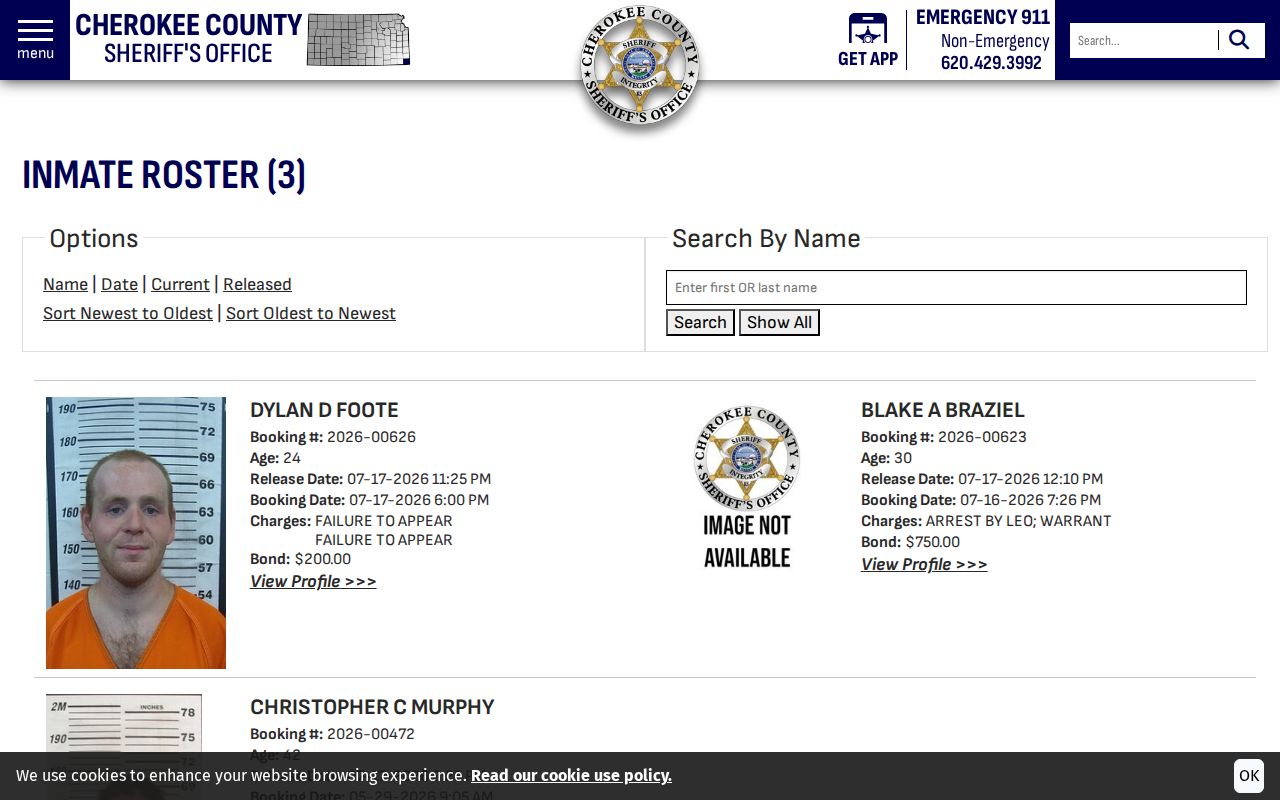
A displayed card supports the statement that the jail recorded that booking as released. It does not support an unstated conclusion that charges ended or the person went home.
Cherokee County Jail Out-Processing
The sheriff’s operations page describes the staff roles behind release. A Booking Officer receives prisoners and out-processes people being released. A Control Panel Operator controls facility entrances and exits, updates inmate rosters, and processes completed booking files. Those duties connect a public release timestamp to the jail’s administrative workflow.
The page does not publish release hours, an exit door, a family waiting place, weekend or holiday steps, property-return rules, transportation, or gate money. Call the jail before planning a pickup. A prior card’s time does not predict when another person will complete clearance.
The official jail operations page documents these roles.
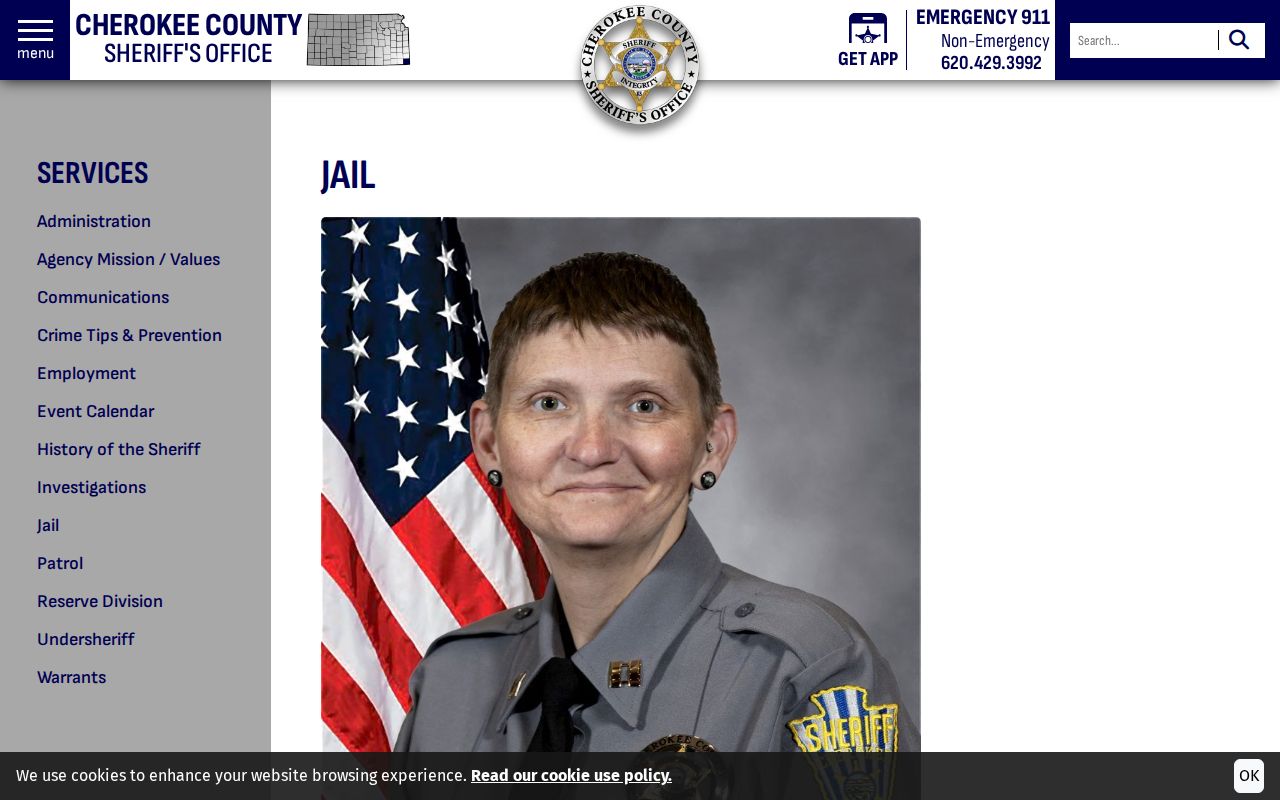
The staff description does not reveal why a person left or which agency, if any, took custody next.
Cherokee County Jail Release Records
The online Released view is recent, not a permanent archive. During the research snapshot it covered about three dates, but the sheriff makes no promise about a fixed window, update rate, or retention period. An older card can disappear while the underlying jail and court records remain.
Use a focused Kansas Open Records Act request for the durable record. Give the full name, approximate booking and release dates, and booking number. Ask for existing items such as the booking sheet, out-processing record, release date and time, release type if recorded, and a public destination or transfer notation if it exists. Request the booking photo separately in its existing electronic format. Do not ask the custodian to create a report or answer a broad question.
915 East Country Road
Columbus, KS 66725
Mail: P.O. Box 479
Jail: 620-429-3897
Nonemergency: 620-429-3992 or 620-848-3000
Public office: Monday–Friday, 8:30 a.m.–4:30 p.m.
The county KORA form lists the County Clerk / Freedom of Information function at 110 W. Maple, Room 131, Columbus, with 620-429-9500 ext. 5. Advance fees may apply. No fixed numeric fee for the requested release record was verified.
Keep the request tied to one booking episode. A useful description names the person, gives the booking number, and supplies a narrow date range. It can ask for the existing booking sheet, out-processing form, recorded release code, authorizing document, and public transfer notation. The custodian decides what exists and what Kansas law permits the county to disclose. If part of a record is restricted, ask whether a segregable nonexempt portion can be provided. The online card’s disappearance does not show that the agency record was deleted, sealed, or expunged.
Cherokee County Jail Court Records
The jail timestamp and court order prove different events. A judge may authorize release first, while jail staff later receive the order, clear holds, and finish out-processing. Search for bond, release, dismissal, judgment, sentence, probation, revocation, or commitment entries. A court order does not prove the person passed the jail door at the same time.
Use the arresting agency and charge to find the right court. State cases usually point to Cherokee County District Court. An ordinance case may remain in the relevant municipal court even when the city police arrest produced a county-jail booking. If the docket shows commitment to KDOC, the person did not return to the community merely because the local booking ended.
Cherokee County Jail Transfer Checks
For KDOC, search KASPER by KDOC number when possible, or use name with date of birth, conviction county, location, and other identifiers. Read the full custody and supervision history. KASPER updates each working day and is not a county-jail archive.
For a federal matter, consult the District of Kansas docket or PACER. A federal pretrial prisoner may be held under contract in a facility not shown by BOP. The BOP locator is more useful after a sentenced prisoner enters BOP custody or for BOP’s recorded release information. USMS does not provide a public historical release locator.
For immigration custody, use ODLS and ERO only when the facts support that route. Cherokee County research did not establish a local ICE facility or county ICE contract. A transfer should not be inferred from a name disappearing from the sheriff roster.
ICE Holds After Cherokee County Release
An ICE detainer is a request for notice and for up to 48 additional hours so the Department of Homeland Security can assume custody. A county booking may therefore close while civil immigration custody begins. That is a release from Cherokee County Jail, not proof of release from all custody.
Confirm the county exit first. Then use the ICE Online Detainee Locator System and ERO guidance. ODLS can lag and has its own search limits. If no result appears, contact the responsible office rather than turning the missing record into a claim of community release.
Resolve Cherokee County Release Conflicts
Official systems can show different times because they record different events. A court files an order, jail staff complete clearance, the roster is updated, and an outside notification system ingests data on separate schedules. Preserve the booking number and the time each source was checked.
When records disagree, ask each custodian about its own entry. Do not resolve identity through a photo alone. Use the booking number, date, charge, arresting agency, and court case together. The sheriff also warns that roster information cannot be certified for accuracy or authenticity and that charge and bail details can change.
Build a short chronology before calling. Note when the court entered any order, when the jail recorded release, when the roster was retrieved, and when a receiving locator was checked. A state commitment should lead to KASPER, while a federal order belongs in the District of Kansas record. If another county warrant appears, contact that county’s official custody source. Qualified wording can preserve both reports until the offices explain the difference. “The sheriff recorded this booking as released” is supportable from the card. “The person went home” requires more.
Public Record Search
Sponsored Results