
Federal Releases Near Cherokee County
The federal entry in the Cherokee County facility map represents a custody system, not a building in the county. Research found no federal prison in Cherokee County. A federally charged person may be held under USMS responsibility in a local, state, private, or contract facility. Physical location does not change which agency and court records govern the federal case.
A federal pretrial detainee may leave custody after a judge enters a release order, after acquittal, or at another lawful endpoint. A convicted person can be delivered to BOP and later released from a federal prison. A local sheriff card may show that one county booking ended, but it cannot establish that federal custody ended. Follow the receiving agency and the federal docket.
Release from BOP confinement also does not mean federal supervised release has ended. Supervised release is a court-ordered period in the community after prison. Its term and conditions appear in the judgment and docket. Another state, local, or immigration custody event can exist at the same time.
Search Federal BOP Release Records
The BOP Inmate Locator covers federal records generally from 1982 forward. It accepts BOP Register, DCDC, FBI, or INS numbers. A name search can add race, sex, and age. Number search is stronger because names can collide and spellings can change.
- Search by the federal register or other accepted identifying number when known.
- Otherwise enter the full name and narrow with the available descriptive fields.
- Compare the register number before accepting a match.
- Read the location and Release Date exactly as displayed.
- Separate a past recorded release from a future projected date.
- Check the federal docket for the judgment and any supervised-release term.
A past Release Date paired with RELEASED or Not in BOP Custody supports the endpoint shown in BOP records. It does not prove release from all custody or the end of supervised release. BOP's displayed current age is the person's age now, not age at release. UNKNOWN means the locator has not determined the term, not that release occurred.
The official BOP locator capture shows the search channel used for a sentenced federal prisoner.
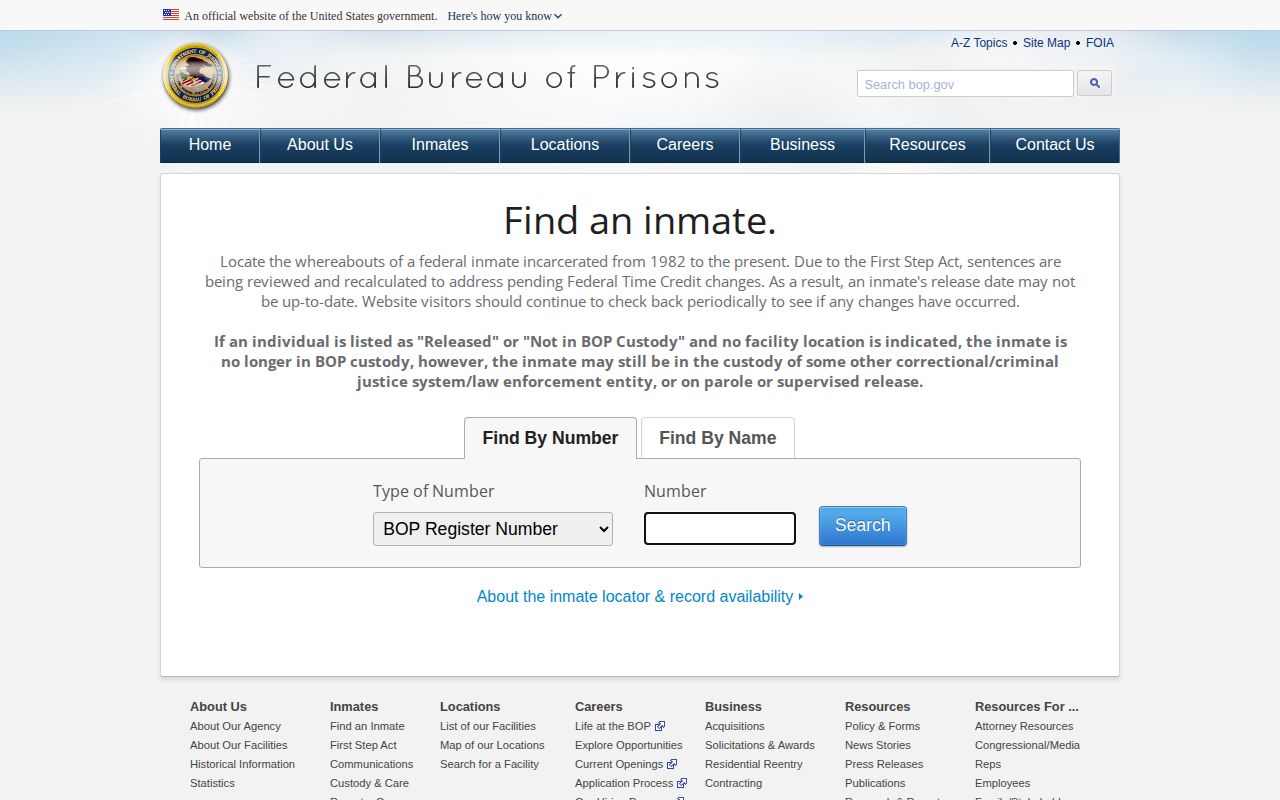
The result must be tied to its register number and checked against the federal court record.
Interpret Federal Release Date Fields
BOP explains that its locator updates daily. A future date can change through sentence recalculation, earned credits, court action, or other federal rules. Do not turn a future value into a promise. A temporary discrepancy is best resolved through BOP records and the sentencing docket.
| BOP field | Supported conclusion | Limit |
|---|---|---|
| Register number | Identity of one BOP record | Does not identify a county booking alone |
| Past Release Date | BOP's recorded custody endpoint | Does not end supervised release |
| Future Release Date | Current projected federal date | Can change after recalculation |
| UNKNOWN | Term not determined in the locator | Does not mean released |
| Location | Current or endpoint context | Does not rule out another custodian |
The BOP locator record explanation also warns that coverage can include some people once in federal custody who did not serve a federal prison sentence, including certain pretrial or material-witness cases. Records before 1982 may require the National Archives.
The official record-explanation capture documents these locator limits.
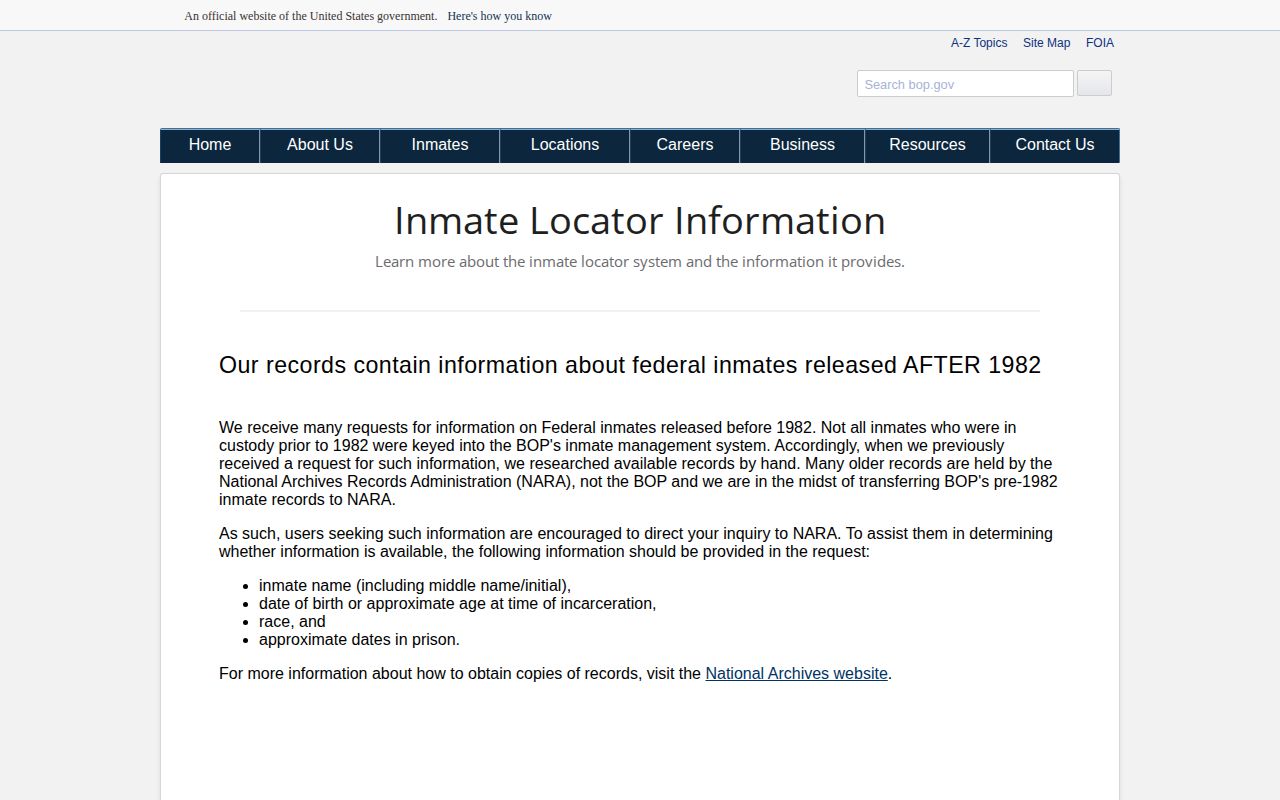
Keep BOP's exact wording rather than converting every endpoint into “sentence complete.”
USMS Cherokee Federal Custody
The United States Marshals Service assumes responsibility for federally charged prisoners from court-ordered custody through acquittal or conviction and delivery to BOP. It houses many prisoners in non-BOP facilities. A person connected to Cherokee County can therefore be physically held elsewhere while remaining under federal authority.
USMS has no public historical release locator comparable to BOP. If a person disappears from a holding facility, possible explanations include court release, transfer, transport, or delivery to BOP. The federal docket identifies judicial authority. BOP becomes useful after admission to its sentenced system. The USMS general prisoner-custody contact documented in the research is 703-740-8400, with district contacts available through the agency.
District of Kansas Release Orders
The District of Kansas court-records route is the durable source for a federal detention order, release order, judgment, and supervised-release terms. A court order establishes legal authority. It may not record the minute that staff completed physical release, and another hold can still affect where the person went.
Use the case number when possible. Confirm the party, charge, filing date, and chronology. Look for detention or release orders, judgment, sentence changes, revocation, and supervised-release entries. Obtain the actual document when docket shorthand is unclear.
The District of Kansas capture identifies the official federal court access channel.
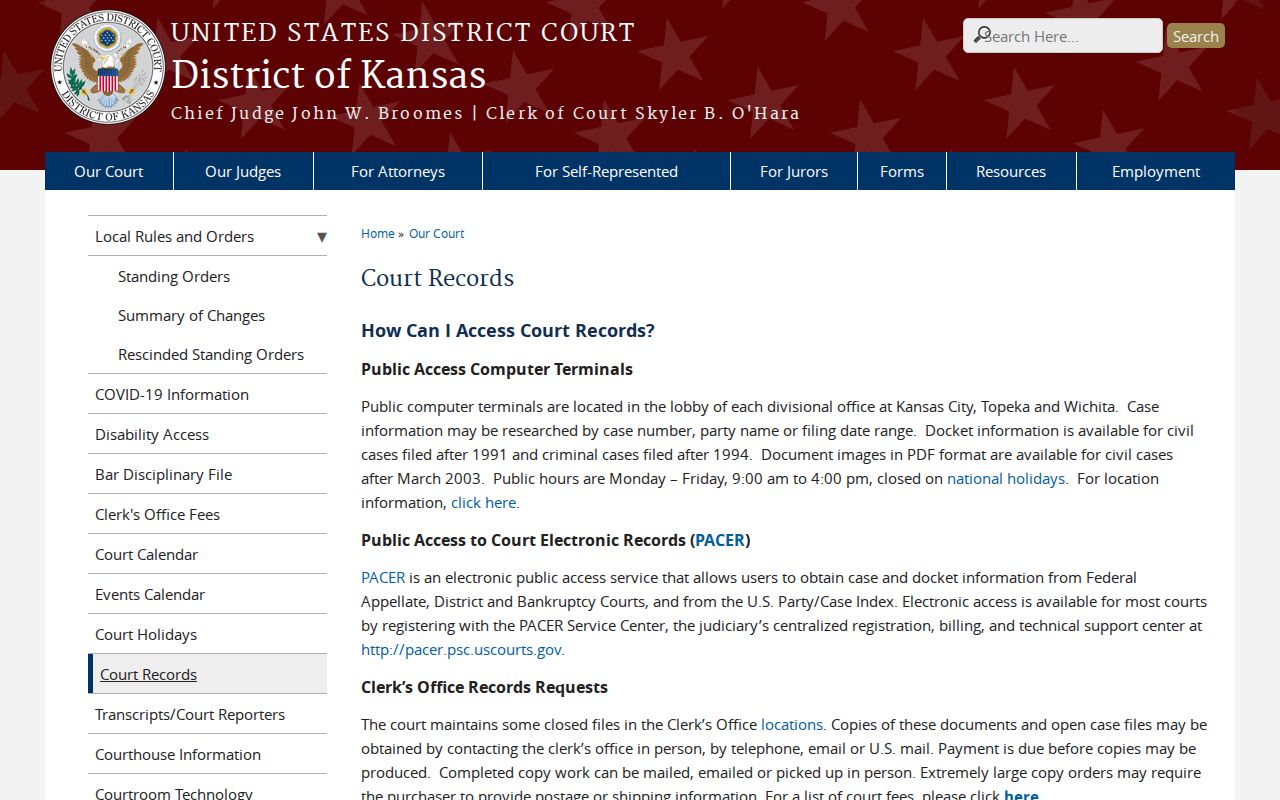
The docket explains federal legal authority, while the holding agency or BOP record confirms the custody endpoint.
PACER Federal Release Verification
PACER is the official nationwide federal court records service. Search the District of Kansas case when the local court portal does not provide the needed document. CourtListener RECAP can help discover contributed copies, but it is nonofficial and incomplete. Verify decisive facts in PACER or with the clerk.
The official PACER capture shows the national route for court records.
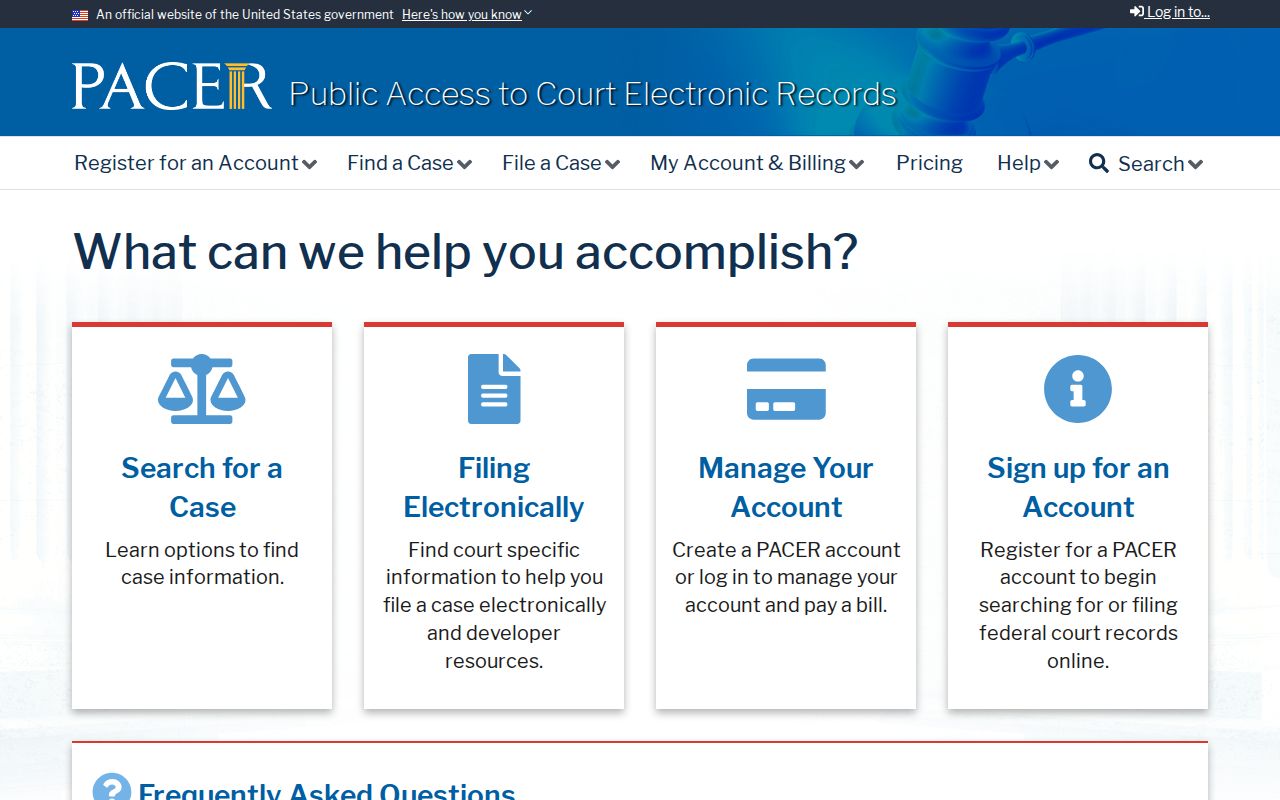
A docket may show that release was authorized before the jail or detention provider completed out-processing. Preserve both times because they describe different events.
- Pretrial release
- Release from detention while the federal case continues under court conditions.
- BOP release
- The custody endpoint reported for the federal prison record.
- Supervised release
- Court-ordered community supervision after prison.
- Transfer
- Movement between custodians without release from confinement.
Federal Versus Cherokee Release Records
The Cherokee County Jail Released roster records local out-processing. It is not a federal status system. If federal proceedings or USMS responsibility are documented, use the District of Kansas docket and the receiving agency. If BOP accepted the person, use the locator by register number.
| Custody question | First source | Confirmation |
|---|---|---|
| Did the Cherokee booking end? | Sheriff Released roster | Jail release record |
| Did a judge authorize federal release? | District of Kansas docket | Release order and clerk |
| Was the person released from BOP? | BOP locator | BOP record and federal docket |
| Did federal supervision end? | Federal docket | Court order or supervision record |
The Cherokee County release search helps route an uncertain custody type. Do not describe a person as free merely because one system reports release.
Request Federal Release Records
For a BOP custody record, use the agency's federal records process and provide the register number, full name, and exact fields sought. DOJ identity certification may be required for protected records. Ask for existing documents rather than an agency-created explanation.
For a court release, obtain the order from the District of Kansas through PACER or the clerk. For USMS custody history, use the appropriate agency record route because no public historical locator exists. Each request should state a narrow date range and identify the case or prisoner number.
When official results conflict, save dated copies and contact the office responsible for that event. BOP can address its locator record. The court can address its order. USMS or the holding agency can address its custody layer. Qualified language is required until the discrepancy is resolved.
Record retention differs by source. BOP generally provides locator coverage from 1982 forward, while older federal prison material may require archival research. A federal docket can remain the most durable public account of detention authority, judgment, and supervised release, subject to sealed records and court access rules. A contract jail's recent roster may disappear long before the federal case file does.
Use exact identifiers across the sources. The BOP register number belongs to the federal prison record. The federal case number belongs to the docket. A Cherokee County booking number belongs only to that local episode. Matching a name without reconciling those numbers can join separate people or separate custody events.
A future BOP date should be saved with its retrieval date because daily updates and recalculation can change it. A past date should still be checked against the docket when the question concerns supervised release or a later revocation. The most accurate statement identifies the endpoint: release from BOP confinement, release from federal pretrial detention, or completion of supervised release.
Public Record Search
Sponsored Results